

A GFCI outlet not working is common if it has tripped, lost power from another outlet, worn out over time, or is affected by wiring, moisture, or electrical panel issues.
While this is often minor, others can point to real safety risks that should be evaluated.
For this reason, if you are dealing with a GFCI outlet not working, this in-depth guide explains exactly why it happens, what you can safely check as a homeowner, and when it is time to bring in a home inspector.
What Is a GFCI Outlet and Why Does It Matter?
A GFCI outlet, or Ground Fault Circuit Interrupter, is designed to protect people from electrical shock.
Unlike standard outlets, it constantly monitors the flow of electricity. If it detects that electricity is flowing along an unintended path, such as through water or a person, it shuts the power off almost instantly.
Because of this, GFCI outlets are required in areas where electricity and moisture are likely to be close together. These locations commonly include:
As a result, when a GFCI outlet stops working, it often means this critical layer of protection is no longer active. Even if the outlet looks normal, a failed GFCI may not shut off power when needed, increasing the risk of shock or injury.
Why Is My GFCI Outlet Not Working?
Homeowners searching for this question are usually experiencing one of two situations:
- The outlet has no power, and appliances will not turn on
- The outlet will not reset or keeps shutting off
In some cases, the cause can be as simple as a tripped outlet or as serious as hidden wiring defects. Understanding these causes helps you decide what to do next and whether a professional evaluation is needed.
The Outlet Is Tripped and Needs Resetting
The most common reason a GFCI outlet is not working is that it has tripped.
A GFCI outlet trips when it senses an imbalance in electrical current. This can happen due to:
- Plugging in a faulty appliance
- Temporary power surges
- Moisture exposure
- Overloaded circuits
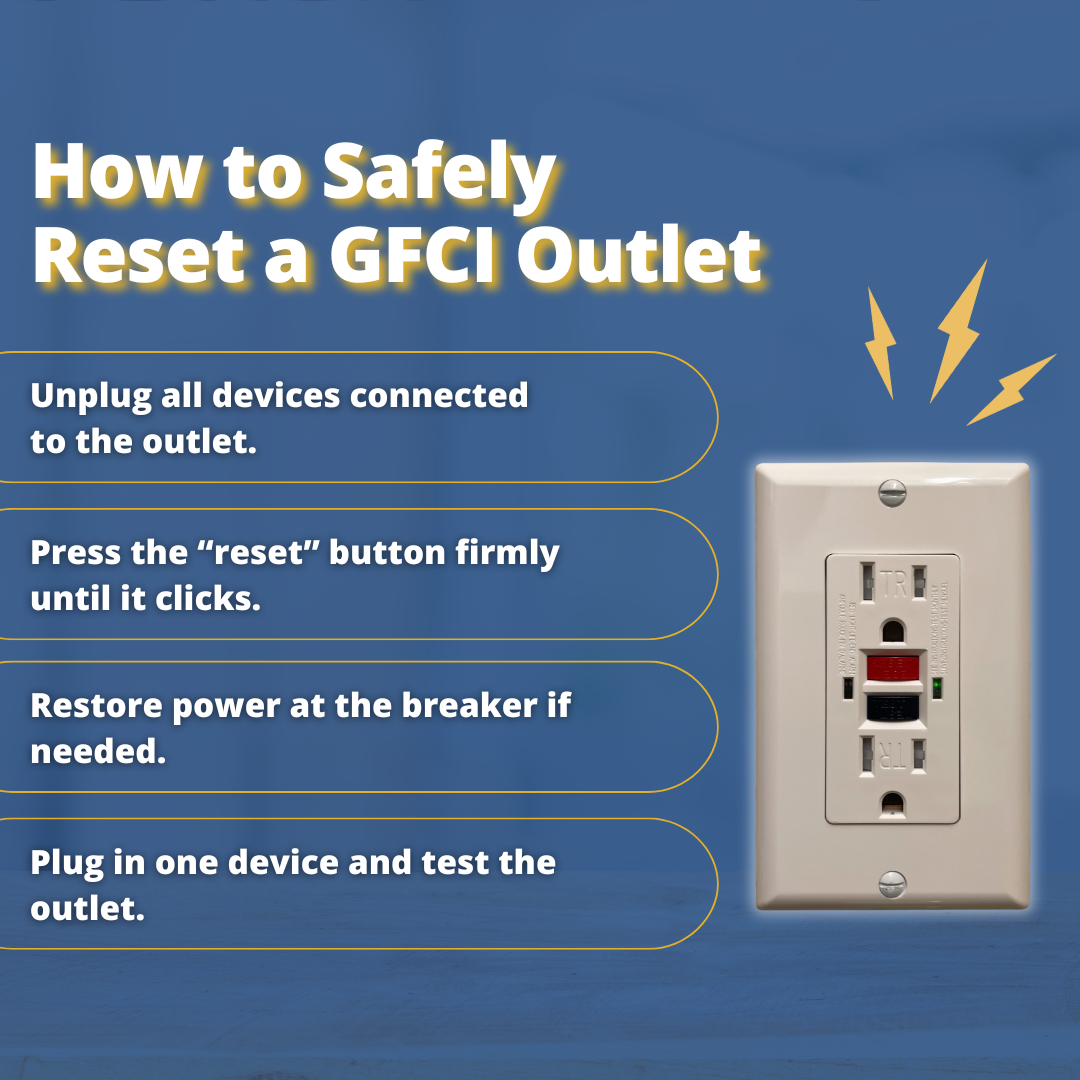
How to Safely Reset a GFCI Outlet
- Unplug all devices connected to the outlet
- Press the “reset” button firmly until it clicks
- Restore power at the breaker if needed
- Plug in one device and test the outlet
If the outlet responds normally, the issue may have been temporary.
When Resetting Becomes a Concern
However, if the outlet trips again immediately or frequently, this is no longer a simple nuisance.
Repeated tripping often indicates moisture, wiring problems, or a failing outlet that should be evaluated further.
Another GFCI Outlet Is Controlling It
Many homeowners are surprised to learn that one GFCI outlet often protects multiple outlets on the same circuit. These are known as downstream outlets.
When the main GFCI trips, every outlet connected to it may lose power, even if those outlets do not have reset buttons.
Common Places to Look for the Controlling GFCI
- Garage outlets controlling outdoor plugs
- Bathroom GFCIs controlling hallway or bedroom outlets
- Kitchen GFCIs controlling nearby countertop outlets
Home inspectors regularly encounter outlets reported as “dead” that are actually functioning correctly but are controlled by a tripped GFCI elsewhere in the home.
The Outlet Has Reached the End of Its Lifespan
GFCI outlets wear out over time. Most GFCI outlets are designed to last around 10 to 15 years.
Though heavy use or harsh conditions can shorten their lifespan.
Signs an Outlet May be Failing
- The reset button will not stay engaged
- The outlet fails the test button
- Power cuts in and out randomly
- The outlet feels loose or unstable
For this reason, a worn-out GFCI outlet may still provide power but fail to trip during a fault, which defeats its purpose. Replacement is typically recommended once failure is confirmed.
1. Wiring Problems Behind the Wall
Wiring issues are a frequent cause of GFCI outlets not working and are commonly noted during home inspections.
Possible wiring problems include:
- Loose wire connections
- Incorrect line and load wiring
- Damaged or deteriorated wiring
- Missing or improper grounding
These defects are not visible from the outside and cannot be diagnosed by resetting the outlet. Improper wiring increases the risk of shock, outlet overheating, and electrical fires.
This is one reason inspectors caution against DIY electrical repairs without proper training.
2. Moisture or Water Exposure
GFCI outlets are designed to respond to moisture, but repeated exposure can damage them permanently.
Moisture-related causes include:
- Bathroom steam and poor ventilation
- Leaking sinks or plumbing fixtures
- Water intrusion in basements
- Rain exposure at outdoor outlets
When moisture is involved, replacing the outlet alone may not solve the problem. Inspectors often look for leaks, drainage issues, or ventilation problems that could continue to damage electrical components.
3. Breaker or Electrical Panel Issues
Sometimes the GFCI outlet is not the source of the problem. The issue may originate at the breaker or electrical panel.
Potential panel-related causes include:
- Tripped or weak breakers
- Overloaded circuits
- Aging or outdated electrical panels
- Loose connections inside the panel
If multiple outlets stop working at the same time, the problem is more likely tied to the circuit or panel rather than a single outlet. During inspections, electrical panel concerns are often noted alongside GFCI failures.
Is a GFCI Outlet Not Working a Safety Concern?
Yes, it can be a serious safety issue. A non-working GFCI outlet means shock protection may be missing in areas where it is most needed.
Electrical safety organizations credit GFCIs with significantly reducing electrocution risks in homes.
Without proper GFCI protection:
- Shock risk increases near water
- Electrical faults may go unnoticed
- Hidden wiring problems can worsen over time
Because of this, GFCI outlets are always tested during a professional home inspection.
.png)
When Should You Call a Home Inspector?
A home inspector should be considered when:
- A GFCI outlet will not reset
- The outlet repeatedly trips without explanation
- Multiple outlets lose power
- You are buying or selling a home
- The issue appears during an inspection
Inspectors help identify whether the problem is isolated or part of a larger electrical concern. Their role is evaluation, not repair, which means homeowners make informed decisions before hiring an electrician.
What Home Inspectors Look for With GFCI Outlets
During a home inspection, GFCI outlets are tested using specialized tools rather than just pressing the test button.
Inspectors typically evaluate:
- Proper tripping response
- Correct installation and wiring
- Required GFCI locations based on current standards
- Signs of moisture damage or wear
Non-working, missing, or improperly installed GFCI outlets are among the most common electrical defects noted in inspection reports, especially in older homes.
How GFCI Issues Can Affect Home Sales
GFCI outlet problems frequently appear during buyer inspections and can impact real estate transactions.
For Sellers
- You may need to handle repairs before closing
- Inspection findings can delay negotiations
- Small fixes can prevent last-minute issues
For Buyers
- GFCI issues may indicate outdated electrical systems
- Repairs improve safety after move-in
- Inspection reports guide repair priorities
Addressing GFCI concerns early often reduces stress for both parties.
Common GFCI Problems and What They Mean
| GFCI Issue | What It Often Means | Next Step |
| The outlet will not reset | Failed outlet or wiring issue | Schedule evaluation |
| Outlet trips repeatedly | Moisture or wiring problem | Stop use and inspect |
| Multiple outlets are not working | Downstream GFCI or breaker issue | Locate the main GFCI |
| The test button does nothing | No shock protection | Replace outlet |
| The outlet feels warm or loose | Unsafe condition | Immediate inspection |
Related Questions
Can a GFCI outlet stop working without tripping?
Yes. Internal components can fail even if the light or outlet appears to be functioning normally.
Why does my GFCI outlet keep tripping?
Common causes include moisture, heat, faulty appliances, or wiring defects.
Do all bathrooms need GFCI outlets?
Yes. Modern safety standards require GFCI protection in basements and bathrooms.
Can I replace a GFCI outlet myself?
Some homeowners and home inspectors can, but improper installation is common and risky.
Will a failed GFCI outlet fail a home inspection?
In most cases, yes. Non-working GFCI protection and light outlets with damage are typically a defect.
Conclusion
A GFCI outlet not working is more than an inconvenience. In many cases, it can signal aging components, moisture problems, or hidden electrical defects that affect safety.
While some issues are simple to resolve, others require professional evaluation to ensure the home remains safe and compliant.
If you are experiencing a GFCI outlet not working, preparing to buy a home, or planning to sell, a professional home inspection can provide clarity.
A qualified home inspector at Edifice Home Inspections can identify safety concerns, explain findings in clear terms, and help you understand the next steps so you can protect your home and the people living in it.
10 Comments
Comments are closed.